Refractometer for Alcohol Production Process
Ethanol or ethyl alcohol is a hydrocarbon compound that can be produced by fermentation process. Ethanol production is generally the use of waste materials from industries to produce. It can be divided into 3 types: starchy raw materials such as cassava, lignocellulose raw materials such as rice straw, corncobs or sugar raw materials such as sugar cane and molasses, which are outgrowth of the sugar production process as raw materials to use ethanol as a fuel.
We will give an example of ethanol production with molasses and how it works. What equipment or analytical tools can be used to make the ethanol production process more efficient?
Use the molasses to produce the ethanol by fermentation and distillation to get pure alcohol. First, we have to dilute the molasses with water to get the right concentration before starting the fermentation with the yeast. We can use an analyzer to control the concentration. After we get the correct concentration then use it to ferment the molasses with the yeast at the optimum temperature of 30-35 ◦C for 2-3 days. After that time the sugars will be converted to alcohol. Use the analyzer to analyze the percentage of alcohol and sugar. Then distill it again to reduce the water content until it becomes pure alcohol. The ethanol must be pure alcohol around 95-99.5 % before sending it to the storage tank.
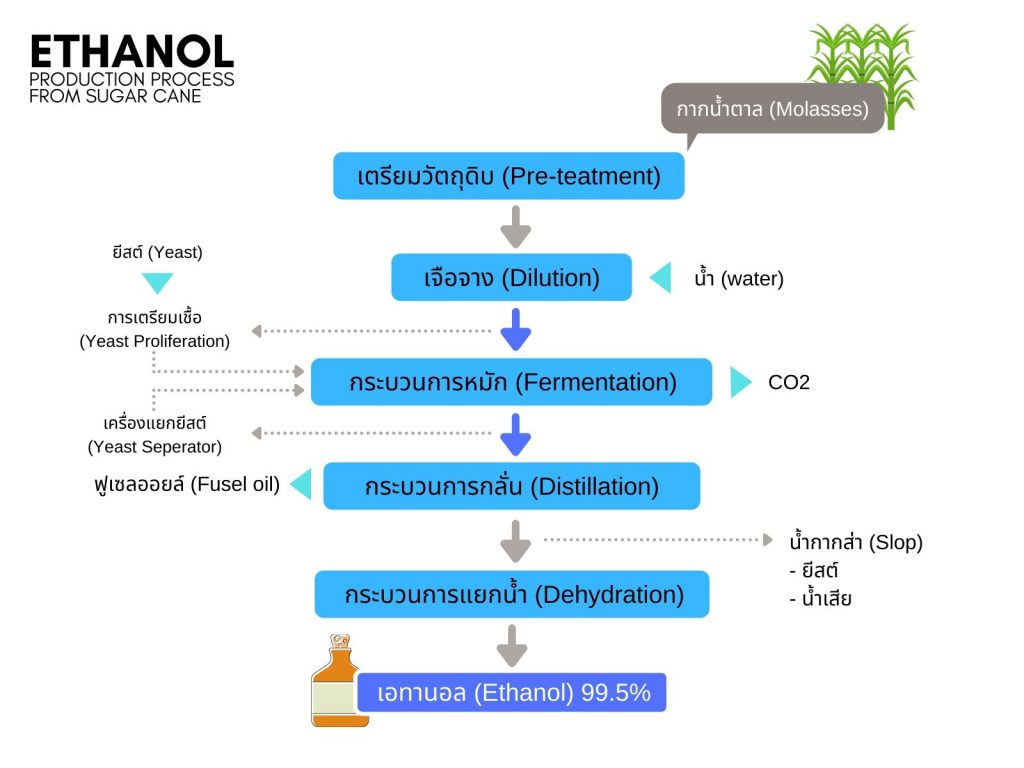
Waste and by-products from the ethanol manufacturing process, such as biogas and carbon dioxide, will be produced. Which can either be used or discarded it is dependent on the operator’s production technology. Furthermore, ethanol will be blended with gasoline as a fuel. It provides cleaner fuel and burns more efficiently when blended in the proper proportions. As a result, air pollution is reduced. It’s also excellent for the environment.
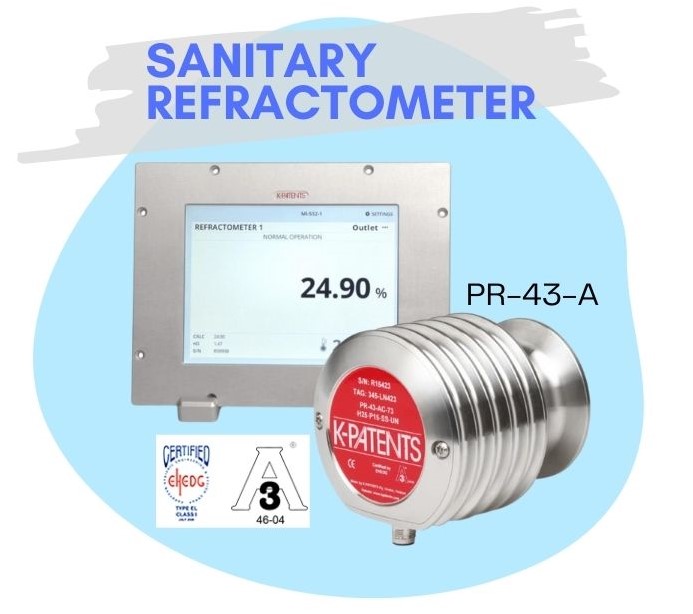
SANITARY REFRACTOMETER PR-43-A
The Sanitary PR-43-A system consists of a compact or probe refractometer for Brix monitoring. Conversion rate and alcohol content (%) can be specified.
It has a measurement range of 0 to 100 Brix and provides an Ethernet or 4–20 mA output signal proportional to the temperature-compensated Brix value for real-time process control with a graphic user interface make it work efficiently.
The PR-43-A refractometer has a built-in web server with an instrument homepage. The homepage allows for configuring, monitoring, verifying and diagnosing the refractometer via an Ethernet connection. Easy to install and lightweight, compact
Key benefits of Refractometer for Alcohol Production Process
- 3-A SANITARY APPROVAL The 3-A symbol guarantees that the Sanitary Refractometer PR-43-A conforms to 3-A sanitary standard number 46-04 for refractometers and energy absorbing optical sensors used on fluid products equipment for sensing concentration, and it has passed through the independent third party verification inspection for 3-A symbol authorization.
- Accuracy and stable measurement the measurement is accurate across the full concentration range of 0-100 Brix: R.I. nD ±0.0002 corresponds typically to ±0.1 Brix or % by weight. The measurement is not affected by bubbles, particles, color or vibration. The system withstands CIP and SIP cleaning.
- No regular maintenance there are no moving parts within the refractometer that would require regular maintenance. Fully digital instrument. Drift-free calibration. No need for re-calibration and mechanical adjustments.
